
Summer body
Diet, Fitness, Nutrition, weight loss

Three Food Habits to Implement Now to Get Ready for Summer 2023

Summer 2023 is sneaking up on us – are you ready?! Usually, we get to the end of May, sometimes even June, and quickly Google “How to get a bikini body in 10 days.” Don’t wait until it’s too late. Start now! It takes 6-8 weeks to see a real change in your body. Starting at the end of May is too late to make real, sustainable changes. 

Beach body
But – don’t worry. The changes needed to get you ready for summer 2023 aren’t drastic. Too often, we’re told we need to restrict, restrict, restrict. No more eating out, no more carbs, no more sugar, etc. We try it and then fail within 10 or so days because it’s just not the way we’re meant to live. We either have families with birthday parties or we like to go out with friends. Sometimes it’s just a very busy schedule that makes it hard. 

If you make small, sustainable changes to your eating and lifestyle habits, you can get the summer body you’ve wanted and can be proud of all without sacrificing life events. 

These three tips will help you implement the changes needed to get you ready for summer 2023. 


  1. Eat more whole, nutrient-dense foods.

Yes, eat more, not less! More of the right types of food will help heal the inside so the outside looks healthy and happy. 


If you focus on eating whole, nutrient-dense foods such as fruits, vegetables, lean proteins, and whole grains you won’t struggle with the restrict/binge cycle that fad diets often cause. These foods will help you feel fuller for longer, provide your body with essential nutrients, and can even boost your metabolism. 


So what are whole, nutrient-dense foods?

  • Whole grains – rice, whole grain pasta, oats, and quinoa are great options. These carbohydrates will give you energy and fiber to keep you fuller for longer. Which is just what you want when it comes to weight loss and health.
  • Lean Protein – chicken, fish, lean cuts or red meat, beans, lentils and tofu are all great options. 
  • Fruit – fresh fruit makes a fantastic snack. Berries are high in vitamins and minerals and are low in sugar. 
  • Vegetables – if you’re unsure if you like vegetables, try different methods of cooking. It can definitely improve the flavor and it’s a quick cooking method. Try to fill at least half of your plate with fruits and vegetables at each meal.
  1. 2. Cut back on processed and sugary foods.

While processed foods definitely have their place – they provide a quick and convenient option when you’re on the go – they should not be a staple in your everyday food intake if you’re aiming to lose weight or just to be healthy. And, outside of weight loss, they can leave you with an energy crash making you feel sluggish and lethargic the rest of the day. Processed and sugary foods are often high in calories and low in nutrients (vitamins and minerals) and can contribute to poor health. Overconsuming these types of foods will not serve your summer body goal. 

Examples of some easy swaps: 

  • Instead of a cinnamon roll for breakfast, make a packet of instant oats and add some fruit and cinnamon. 
  • Instead of a burger and fries for lunch, order a grilled chicken sandwich with a side of a baked potato or fruit cup. 
  • Instead of 3-4 slices of pizza for dinner, have 1 slice of pizza then pair it with a  grilled chicken salad. 
  • For dessert- berries, whipped cream, and a sprinkle of chocolate chips will cover the chocolate craving while giving your body a boost of antioxidants. 
  • And watch out for sugary drinks! Search Pinterest for some lower-calorie options for your favorite coffee drinks. 

Just like anything, having these types of “fun” foods is okay in moderation. But when the goal is to feel good for summer, make sure to lower your intake of these and focus on the foods that are going to keep you energized and feeling great. 

  1. 3. Stay hydrated.

In case you didn’t know, water is essential. Not just for weight loss and health, but for good skin, hair, digestion, and even energy. When you’re dehydrated, the body cannot function well. You will deal with effects such as dizziness, foggy thinking, constipation, and severe fatigue. 

water, hydrationWhen you do drink the water you need, the body can run much more efficiently. Motivation will be up, and you’ll want to put in the work to be healthy. Something as simple as getting your water in can keep you on the right path to a healthy lifestyle. A great goal to start with is half your body weight in ounces. 

Tips for getting in more water: 

  • Get a new water bottle. It’s fun and can keep you motivated. 
  • Set reminders on your phone. 
  • Add mint leaves, cucumbers, or freshly squeezed lemon  to keep it refreshing. 
  • Drink a glass of water before every meal. 

By implementing these three food habits now, you can set yourself up for success and feel your best when summer rolls around. Remember that small changes can make a big difference, so start small and build from there. Start by adding veggies to all lunches and dinners. Then swap out some of your desserts and mid-day snacks from packaged sweets to fruit and nuts. Grab a water bottle you love and keep it with you wherever you go. Small changes like this are easy to keep up with and can make a big difference over a few weeks’ time. 


If you want more guidance on nutrition and what you need to do to manage your health, email Jalpa to set up a consultation!  


Jalpa is a registered dietitian and nutritionist with a Master’s degree in Health & Nutrition from Brooklyn College, CUNY in New York. She also holds a Certificate of Training in Adult Weight Management through the Academy of Nutrition & Dietetics, CDR.

Related Articles: 
Alcohol, Diet, Fitness, Food, Nutrition

Is Social Drinking Ruining My Health? 3 Tips to Practice Moderation

what does alcohol do to your body

A​lcohol consumption is a heavily debated topic among health experts. Some people can lead very healthy lifestyles while still consuming alcohol. And others demand that there is no healthy way to incorporate it. Social drinking is a popular pastime enjoyed by people around the world. It’s a part of almost every culture. It’s often seen as a way to unwind or celebrate big occasions. Wondering if social drinking is ruining your health? 

Due to the addictive properties of alcohol, social drinking can quickly take a turn into a habit that negatively impacts your health.

S​ome of the biggest concerns are:

  • H​ow much alcohol is “safe” to drink per day?
  • H​ow does alcohol affect the brain long term?
  • I​s alcohol preventing me from reaching my fat loss goals?
  • D​oes alcohol actually prevent fat loss or muscle gain?

Social Drinking vs Heavy Drinking

Before diving into health risks, we need to determine social drinking versus heavy drinking. How much is okay and how much is a deadly habit? Social drinking is consuming alcohol during social situations, such as a party or a dinner with friends. It is usually done in moderation – a small amount over a long period of time. Heavy drinking involves consumption of large amounts of alcohol in a short period of time- usually resulting in drunkenness or loss of control.

W​hen compared with heavy drinking, social drinking seems harmless. Most people know the risks of heavy drinking – liver damage, addiction, etc. Because social drinking is much “lighter” it can be hard to see or even care about the small risks. Alcohol – in any amount – is a toxin to the body. But there are some levels that have been deemed “safe”. The U.S. Dietary Guidelines say a moderate limit is 1 drink a day for women and 2 drinks a day for men. However, while binge drinking or heavy drinking is mostly thought of as a college behavior, studies have shown that people carry this behavior into their lifestyle post-college. The National Institutes of Health says that regular heavy drinking can damage the brain (specifically the frontal cortex), which will inhibit decision-making.

B​ut what if you genuinely stick to the “social drinking” guidelines and are truly a moderate to light drinker? Does alcohol still pose a risk to your health?

Social drinking vs alcoholic

Social drinking and your health

U​nfortunately, because alcohol is a toxin, there are still health risks even if you drink moderately. It may not seem harmful, because these effects are small and add up over time. If you have health goals whether it’s fat loss or muscle gain, these adverse effects need to be taken into consideration.

1​. Weight Gain – Alcohol contains a high number of calories and regular consumption of alcohol can lead to weight gain. We all love a snack post-drinking as well, which makes it much more likely that you’re going to eat more calories than you would if you weren’t drinking.

2​. Poor Sleep – A​lcohol always disrupts sleep. Even if you go to sleep more easily or it makes you tired, the quality of sleep you’re getting is not real. Alcohol prevents your body from going through all the important phases of sleep that it needs in order to recover well.

3​. Mental Health Issues – Regular alcohol consumption can increase your risk of developing mental health issues, including depression and anxiety.

Three of the most important things needed for weight loss – a calorie deficit, quality sleep, and mental energy (willpower!) – are affected by alcohol. While it may be fun in the moment, social drinking may be what continues to derail your diet and your results.

B​ut don’t worry – there are ways to be flexible with it so that you can still enjoy social outings and continue to push for the results you want.

3​ Tips to Practice Moderation while Drinking

how much alcohol is safe to drink daily

1​. Set limits.

B​e honest with yourself and put parameters around your social outings if you’re serious about your health goals. If you know you’ll be going out for drinks with a friend on Saturday night, skip the drinks throughout the week so that the amount of alcohol you’re consuming isn’t adding up throughout the week. It’s also smart to know that you’re going to want or need food after a few drinks.

T​here are two food adjustments you can make that will help you stick with your weight loss or muscle gain goals while drinking. Because alcohol does contribute a lot of calories, make sure dinner is focused on protein and high-fiber carbohydrates such as vegetables. This will keep dinner on the lower calorie side, but will still be satisfying. If you lean more towards high fats and high carbs (like a basket of french fries!) it’s very easy to mindlessly eat them while drinking. By staying focused on protein and high-fiber carbs, you’ll be nourishing your body without the chance of overeating. 

You can also make sure to have a snack prepared for post-drinking. But have it already portioned. You’re likely to snack your way through a full bag of chips when you get home if you’ve had a few drinks. If you have individually portioned bags, you’ll keep calories under control. This snack can also be a high-fiber carb – like Skinny Pop!

2​. Keep it low in sugar

W​hile most people love sugary cocktails- these are full of empty calories. And they’re easy to gulp down. If you stick with a drink mixed with club soda vs sugary mixes, you’re going to sip it slowly. And the calorie count can stay low. 

3​. Take a break.

Studies have shown that your health and body can “reset” with a break from alcohol. It’s okay to go through a “season of no” to pursue your health goals. While taking care of your health isn’t always as celebrated like drinking is – it can absolutely be worth it. Just one month without alcohol can have effects such as:

  • Healthier skin
  • ​Better sleep
  • Lower blood pressure
  • Improved B​ody composition (less fat!)
  • G​I system improves (the lining of your gut that acts as a barrier to keep harmful pathogens out is repaired after just 3 weeks without alcohol)
  • Less brain fog

N​ot sure you could stick to a break while being peer pressured to drink? Just test the waters. Order a club soda with lime while at dinner with friends- so that you do still have a drink in hand – and see how it goes. You may be surprised at the support you receive when choosing to take a break.

If you want more guidance on nutrition and what you need to do to manage your health, email Jalpa to set up a consultation!  


Jalpa is a registered dietitian and nutritionist with a Master’s degree in Health & Nutrition from Brooklyn College, CUNY in New York. She also holds a Certificate of Training in Adult Weight Management through the Academy of Nutrition & Dietetics, CDR.

Related Articles: 

Diet, Fitness, Food, Nutrition, Stress

Stress is Causing Your Bad Eating Habits! 7 Tips for Managing Both


Y​ou get home from a long day of work. You’re tired. You’re stressed about the never ending To Do list, the laundry, and the work projects you haven’t gotten done yet. And that’s when the stress eating begins!

W​hat’s the last thing you want to do? Cook a healthy meal. Or eat a healthy meal even if it’s already cooked. You want junk food. You start mindlessly snacking on a bag of chips- almost as if you have no control. Your mind is tired and you don’t want to think about it. You know it’s sabotaging your weight loss goal, but you do it anyways.

W​hy? Why do we feel the uncontrollable need to binge eat junk food when we’re stressed? 

T​he good news: it’s “technically” not your fault. It’s not always just a matter of discipline. C​hronic stress creates chemical and hormonal changes in the body, making it extremely hard to “say no” to bad eating habits.

W​hat is stress?

Stress is the state of mental or emotional strain resulting from very demanding circumstances. There are three different types of stress: acute stress, episodic acute stress, and chronic stress.

A​cute stress happens day to day. It’s the stress of sitting in a traffic jam or hurrying through the lunch rush. It can be good stress as well- like riding a roller coaster or skiing down a steep hill. E​pisodic acute stress is acute stress happening too often, such as the busy hours of a holiday season. It typically comes to an end after a few weeks.

C​hronic stress is the acute stress that lingers. For example, a difficult conversation with your boss is a version of acute stress, but if it doesn’t come to a resolution and, instead, stays with you for days or weeks, it is constantly wearing on you.

T​he physical responses to acute stress – higher heart rate, rise in blood pressure, or breathing changes – are all very normal. It’s part of the “fight or flight” response the body has in order to deal with the stress instantly.

Chronic stress leads to bad eating habits.  C​hronic stress, however, is the detrimental one. It’s hard to feel. It’s hard to admit that you’re under stress, because it’s “normal” to just be busy and live with it. Your body is in a very mild “fight or flight” response mode over time, and with no real chance to recover and settle down, the adverse effects start adding up.



When stress isn’t dealt with it causes mental, emotional, and physical effects such as:

  • Skin and hair problems (acne, psoriasis, hair loss)
  • Gastrointestinal problems (GERD, gastritis, ulcerative colitis, and irritable colon)
  • Cardiovascular disease (heart disease, high blood pressure, abnormal heart rhythms, heart attacks, and stroke)
  • Depression, anxiety, personality disorders, eating disorders, and sexual dysfunction

How is stress causing bad eating habits?

​Unhealthy eating habits[1] such as eating too quickly, endless snacking, skipping meals, and mindless or emotional eating are often coping mechanisms for an overworked and stressed mind.

C​ortisol, the stress hormone, is released by your adrenal glands in order to deal with whatever is stressing you at the moment. Cortisol’s job is to alert the body to get into “fight or flight” mode. It sends glucose to the bloodstream so that your body has the energy to “fight.” This increase of glucose in the bloodstream leaves you feeling hungry and craving high-fat and sugary foods in order to replenish the glucose stores.

And when you are stressed, your body will store more fat than when it is at rest. So the combination of overeating sugary foods while the body actively works to store fat derails your weight loss goals. As​ the body gains more fat, it makes it harder and harder to want to work on health, therefore putting you into this endless cycle of stressing, eating, and stressing more.

Stress eating

T​hirty-eight[2] percent of adults admit to dealing with overeating unhealthy foods when they are stressed- and most of it is weekly if not daily! It’s happening often enough that it feels impossible to ever reach health goals.

Our stress eating problem is: we’re fighting an emotional issue with a food solution, rather than an emotional solution.

“When you have an emotional problem, it needs an emotional solution, not a food solution. That is really the only way to overcome emotional eating long-term”[3]

S​o how do we break this cycle? We work on habits that will not only de-stress us, but promote healthy eating at the same time.

H​ere are 7 tips for managing both stress and healthy eating habits.

1. Take a 10-20 minute walk daily.  

It can be around your home, workplace, parking lot, or up and down stairs (where ever you can!). Exercise has been proven to buffer the effects of stress.[4] It’s also a great distraction. It can get your mind off of tough situations. But, do it without your phone or headphones. Constantly taking in information whether it’s a podcast or music is not a stress reliever. Give yourself some time to think/breathe/enjoy some quiet. 

2. Put the phone away 20 minutes before bed.

Screentime before bed resets your circadian rhythm. Your brain is being told it’s still daytime causing restless sleep. Feeding your brain more info right before it’s time to relax makes you toss and turn, thinking about all the things from the day or things that still need to be done. It increases your stress. That coupled with a bad night’s sleep causes willpower with food to go out the window. 

3. Drink water!!

It sounds simple, but staying hydrated keeps inflammation in the body down. Stress also wreaks havoc on our skin (hello frown lines and wrinkles!) and water is one of the best things you can give your skin and body. It will help with energy levels, metabolism function, and overall health.

4. Meditate/Breathe 

Find 5 minutes (3-4x a week) where you go into a dark spot, turn your notifications off, and set a timer. Just sit and breathe for those 5 minutes. Let your body completely relax and take a full break from everything going on. Even moms with littles can do this for 5 minutes. No excuses!
5. Have healthy food accessible.

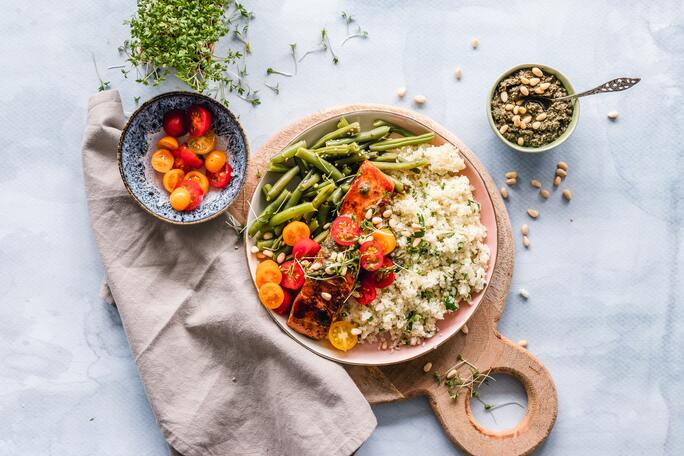
This is a big one. Results are not accidental. If you fail to plan, you will not succeed. Take the time to buy healthy (pre-cooked if needed) options to keep in the fridge and pantry so that when you’re short on time, or are too tired to cook, you have the options you need available. You’ll be less likely to choose fast food!

6. Put the phone down while eating.

You’re not mindful of what and how much you’re eating if you’re lost in scrolling or watching a show. That constant intake of information can also increase your stress levels, which leads to eating out of emotion rather than the need to simply refuel what was depleted.

7. Find healthy swaps for those comfort foods you desire when stress is high.

There’s often nothing wrong with the food we like to snack on, as long as we can control the amount we eat. For example: instead of a whole bottle of wine at night, have one glass + one cup of berries. Or, instead of a pint of ice cream, make a high-protein smoothie. It’s easy to stop yourself when full if you’re eating the things that give you the nutrients you need (protein, fruit, whole grains, etc). It’s very hard to stop yourself from overeating on things that are not nutrient-dense (ice cream, wine). So swap in nutrient-dense food items to help give yourself some control when you feel emotions might take over.

When it comes to de-stressing, something is better than nothing. Start with one habit, and build on it weekly until you are a de-stressed, healthy, happy individual! 


If you want more guidance on nutrition and what you need to do to manage your health despite stress, email Jalpa to set up a consultation!  


Jalpa is a registered dietitian and nutritionist with a Master’s degree in Health & Nutrition from Brooklyn College, CUNY in New York. She also holds a Certificate of Training in Adult Weight Management through the Academy of Nutrition & Dietetics, CDR.


Resources: 

  • American Psychological Association. (2013, January 1). Stress and eating. https://www.apa.org/news/press/releases/stress/2013/eating


Diet, Fitness, Food, Nutrition

Intuitive Eating – Is This Real or Just Another Fad?

How often do you scroll through your social media and see posts on the new diet trend? Most of them promote restriction and disconnection from our bodies, followed by feelings of guilt and low morale, leading to further restriction. This vicious cycle continues and weight loss cannot be maintained. In order to reconnect our mind and body, we have to give ourselves the freedom and the right to listen to what our bodies need and want. Intuitive eating is the practice of connecting our inner feelings to give us a sense of fulfillment both physically and mentally. Preoccupation and apprehension about past and future meals disengage us from being present in the moment and giving the body the nutrients it needs to function optimally. Principles of Intuitive Eating help with body awareness to heal and rejuvenate.

That being said, Intuitive eating is not a diet. It is a lifestyle and practice that allows the body to reconnect to itself to properly fuel for satisfaction both physically and psychologically. It removes rules and restrictions that make dieting hard to maintain. You no longer have to obsess with food because unconditional permission is always given to eat.

All in all, Eat with mindfulness and be present in the moment is what Intuitive Eating is all about. It may seem vague and challenging to being with, hence, for specific recommendations on intuitive eating, consult a Registered Dietitian Nutritionist. Follow this journey and love yourself. You have so much to be present and thankful for. Obsessing over food takes up time and space that can be filled with so many other wonderful things.


Diet, Fitness, Food, Nutrition

Is Your Weighing Scale Showing You The Right Number?

The new year is approaching, and resolutions are in the forefront of our mind. Since we live in a society that is constantly focused on losing weight, it is important to understand weight loss and where exactly the weight is coming from in order to attain sustainable weight loss.

We often look at the scale as an indicator of our success, but what if I tell you to throw the scale away? Yes, you heard it right, your scale can be deceiving and may not give you a complete information about your weight. Weight fluctuates throughout the day and can be lost or gained through fat, muscle, or water.  To maximize health outcomes and sustain the right weight and size, a loss of fat and an increase in muscle mass is important. In all reality, body composition is much more important than the number on the weighing scale!

Fad diets are well known for quick weight loss. The pounds seem to shred off for the first 1-2 weeks, then level off. This rapid loss of weight stems from the loss of water weight and not body fat! Moreover, losing body fat is not as simple as eating less than your total expenditure. Your body tends to hold onto fat for survival purposes as a storage form of energy. It can be challenging to lose body fat and keep it off. Hence, it is imperative to take help from a Registered Dietitian to design a well rounded diet that meets your individual body needs and helps with fat loss.

Be kind to yourself throughout this process because it is a big change. Your body will start to work optimally as soon as you feed it nutrients and give it love. Celebrate the small victories and respect your body.